Current situation
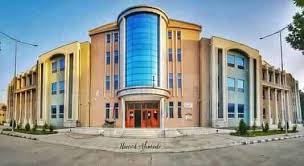
The Faculty of Computer Science has a relatively well-constructed building within the Kabul University campus, which was built with the support of Japan. The building is equipped with modern classrooms, a conference room, a data center, halls fitted with LCDs, well-equipped laboratories, an IP-based video surveillance system, a biometric access control system, and voice communication via IP. The faculty also has a specialized library, study rooms, internet facilities, as well as a heating, ventilation, and air conditioning (HVAC) system.
Faculty Staff and Academic Programs
The faculty members of the Faculty of Computer Science hold either PhD or Master’s degrees and actively contribute to teaching, research, curriculum development, and instructional materials.
Academic Programs of the Faculty
The Faculty of Computer Science offers undergraduate studies in the following three disciplines:
- Software Engineering
- Information Systems
- Information Technology
The Bachelor’s program is completed over four years (8 semesters). In the first year (the first two semesters), students take core and general courses, while in the following three years (6 semesters), they study professional and specialized courses within the three disciplines: Software Engineering, Information Technology, and Information Systems.
Additionally, within the Faculty of Computer Science, there is a fourth department called Computer Science. This department does not have its own graduates; rather, it provides introductory courses of the faculty and university-wide courses to students from other faculties at Kabul University.
In 2014 (1393), the faculty launched its first Master’s program in Information Technology in direct collaboration with Tallinn University, Estonia, through a memorandum of understanding. To date, seven cohorts of graduates have been produced. Later, in 2019 (1398), the Master’s program in Information Systems was initiated by the faculty’s local professors, and three cohorts of graduates have been produced so far. Students in these Master’s programs include university professors, employees of government institutions, and staff from private organizations, contributing to capacity building within universities.
The Doctoral program in Computer Science was approved in 2024 (1403) by the Higher Council of the Ministry of Higher Education. Its curriculum was approved by the Ministry’s Curriculum Commission, and the preliminary preparations, including laboratory equipment, are underway. Practical courses of the program are scheduled to begin on 15th Hoot 1404.