Strategic Plan
slamic Emirate of Afghanistan
Ministry of Higher Education
Kabul University
Faculty of Agriculture
Strategic Planning Committee
Strategic Plan of the Faculty of Agriculture
(2022 – 2026)
Abstract of the Five-Year Strategic Plan of the Faculty of Agriculture, Kabul University
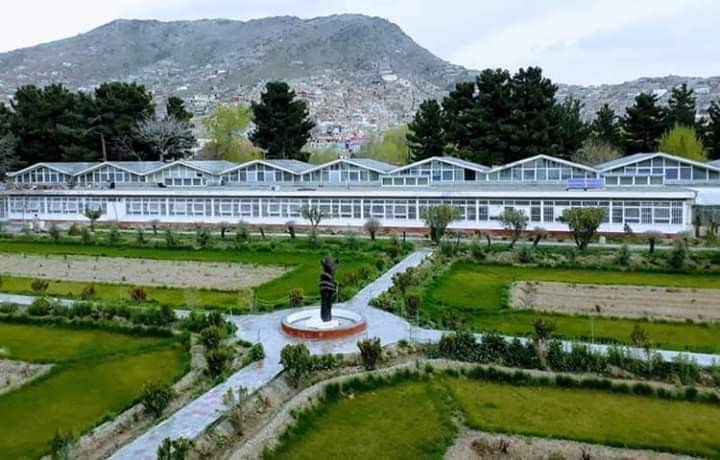
Summary of the Five-Year Strategic Plan of the Faculty of Agriculture, Kabul University (2022 – 2026)
This summary provides a comprehensive, analytical, and formal presentation of the Five-Year Strategic Plan of the Faculty of Agriculture at Kabul University for the 2022–2026 period. As one of the pioneering and foundational institutions of higher education in Afghanistan, the Faculty of Agriculture plays a central role in training specialized human capital, promoting scientific research, advancing sustainable agriculture, and ensuring national food security. The development of this strategic plan has been undertaken in response to the growing needs of society, advancements in science and technology, and the critical necessity of improving the quality of education and research.
This strategic plan is formulated in light of the policies, objectives, and guidelines of the Ministry of Higher Education, the Kabul University Strategic Plan, and Islamic and national values. It also builds upon the experiences gained from the faculty's previous three strategic plans. The document comprehensively examines the current status of the faculty regarding its organizational structure, human capital, academic capacity, educational and research facilities, infrastructure, academic activities and equipment. Additionally, it evaluates teaching and research programs alongside major challenges and limitations, providing a clear picture of the faculty’s current position and future direction."
In this plan, the vision of the Faculty of Agriculture is to become a reputable national and international center for high-quality education, scientific research, innovation, community service, and sustainable agricultural development. The faculty's mission focuses on training specialized, committed professionals across various agricultural disciplines, including animal husbandry at the Bachelor’s, Master’s, and Doctoral levels. Furthermore, it aims to conduct scientific research that addresses national agricultural challenges, reduces poverty, increases agricultural production, ensures food security, and contributes to national economic growth. The faculty's core values encompass adherence to Islamic principles, academic commitment, educational excellence, administrative transparency, professionalism, innovation, and accountability.
To formulate effective strategies, scientific methodologies were employed to analyze internal and external environmental factors. Specifically, the Internal Factor Evaluation Matrix (IFEM), External Factor Evaluation Matrix (EFEM), Internal-External Matrix (IEM), and SWOT analysis were utilized. The results indicate that the Faculty of Agriculture possesses significant strengths, including an experienced academic staff, a long history of academic excellence, diverse departments, and dedicated research farms and orchards. Conversely, it faces challenges such as limited financial resources, insufficient advanced laboratory equipment, a critical need to strengthen research capabilities, and a reliance on government funding. Looking forward, key opportunities include a rising market demand for agricultural specialists, opportunity for the expansion of national and international collaborations, and advanced scientific research development, while threats like economic instability and environmental changes remain pressing concerns.
Based on these analytical findings, the strategic objectives of the Faculty of Agriculture are centered on key thematic areas: improving educational and research quality; developing and standardizing infrastructure and laboratories; strengthening management and leadership systems; promoting e-learning and information technology; and enhancing the faculty’s role in addressing societal and agricultural challenges. Additionally, the objectives emphasize expanding national and international scientific collaborations and gradually transitioning toward financial sustainability. To achieve these goals, five-year implementation programs are established, explicitly outlining specific activities, timelines, required resources, and expected outcomes.
The final section of the plan details robust implementation, monitoring, and evaluation mechanisms to ensure effective execution. These mechanisms include assigning clear responsibilities, establishing measurable progress indicators, creating regular reporting systems, and utilizing evaluation data for continuous program improvement. Ultimately, the successful execution of this Five-Year Strategic Plan will significantly improve the quality of higher education, advance scientific research, cultivate specialized human capital, and strengthen the faculty’s pivotal role in the sustainable development of Afghanistan’s agriculture and national economy.